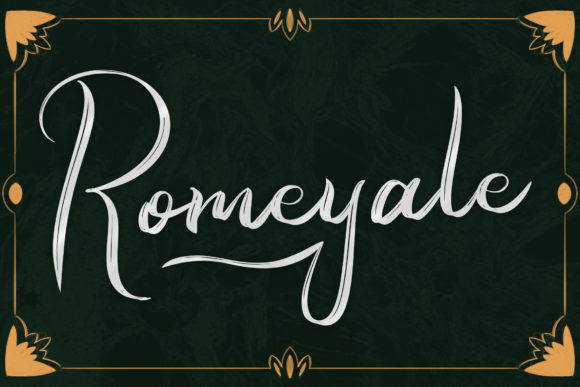
Romeyale Script Amp for Professional Design Projects
A First Glance at Romeyale’s Visual Appeal
When I first encountered Romeyale, it immediately struck me as a design asset that could elevate the emotional tone of any project. Its flowing curves and elegant strokes suggest a handcrafted, artisanal feel—perfect for brands that want to convey warmth, creativity, and authenticity. The mood it creates is soft yet sophisticated, making it ideal for projects that lean into the handmade or boutique aesthetic.
This script font carries a natural energy that feels more like a signature than a standard typeface. It doesn’t scream for attention but rather invites the viewer to pause and appreciate the detail. That subtle balance makes it especially appealing for small businesses and creative entrepreneurs who are building their brand identity from the ground up.
Fitting the Right Projects: Where Romeyale Shines
Romeyale excels in environments where visual storytelling matters. For instance, when designing packaging for a handmade soap line, this font can be used on labels or tags to reinforce the product's organic, personal touch. It also works beautifully in social media graphics, such as Instagram posts or Pinterest pins, where the goal is to catch attention with a visually rich and inviting layout.
In logo design, Romeyale can serve as a decorative element, adding a personalized flair without overwhelming the overall composition. When paired with a clean sans-serif font for body text, it creates a balanced visual hierarchy that supports both readability and brand personality.
For print-on-demand sellers or Etsy shop owners, Romeyale can be a go-to choice for t-shirt designs, mugs, and tote bags. Its character adds a sense of individuality that resonates well with niche markets and handmade communities. In Canva templates or Cricut projects, it can help maintain consistency across multiple printable designs, reinforcing a cohesive brand look.
Real-World Application: A Case Study Scenario
Imagine a client launching a seasonal collection of hand-poured candles. They need branding materials that feel warm, welcoming, and artisanal. Romeyale would be an excellent fit for the label text, as it complements the candle’s natural ingredients and eco-friendly appeal. It can also be used in marketing visuals, such as flyers or posters, to create a unified visual language across all promotional channels.
In a digital context, Romeyale can enhance website headers or blog titles, giving them a personal and approachable feel. For editorial design or content creators, it adds a unique visual signature to headlines, helping to distinguish their work in a crowded online space.
Where to Use with Caution: Limitations and Best Practices
While Romeyale has a lot to offer, it’s not suitable for every situation. Due to its script nature, it should be used carefully in small sizes or on crowded layouts where legibility might suffer. Avoid using it on complex backgrounds or in low-contrast scenarios, as this can make the text difficult to read.
It’s also not the best fit for minimalist branding or professional corporate materials that require a very clean visual hierarchy. In these cases, a more structured font would better support the message and maintain professionalism.
Before using Romeyale in a commercial project, ensure that you have the proper commercial license. This is crucial for designers working with clients or selling products through platforms like Etsy or print-on-demand services.
Design Notes: What Every Designer Should Check
As a designer, I always test a font in black and white to see how it holds up without color. Romeyale maintains good contrast even in monochrome, which is a positive sign for versatility. Next, I check how it looks on light and dark backgrounds, ensuring it remains readable in different contexts.
I preview the font at both small and large sizes to assess its scalability. On real mockups, I place it alongside other elements like product photos or illustrations to see how it integrates within the larger design. Testing print quality is essential if the final output will be physical, such as stickers, t-shirts, or packaging.
Reviewing file formats is another key step. If the asset includes PNG transparency or SVG vector files, they should be inspected for quality and editability. Comparing Romeyale with serif, sans serif, handwritten, and display fonts helps determine how it stacks up in terms of style and function.
Final Thoughts: A Useful Asset for Creative Professionals
Romeyale is more than just a script font—it’s a versatile graphic design asset that can add depth and character to a wide range of creative projects. Whether you're designing for a handmade business, crafting digital assets, or creating printable designs, it offers a unique visual edge that can help your work stand out.
With thoughtful application and proper licensing, Romeyale can become a trusted part of your design toolkit. It’s not a one-size-fits-all solution, but when used appropriately, it can bring a level of polish and personality that elevates the overall impression of your design work.